Drug Rediscovery Protocol (DRUP)
A national study of the effectiveness of targeted anti-cancer drugs and immunotherapy in patients with advanced or metastatic cancer who are no longer eligible for standard treatment and whose tumour is known to carry specific genetic characteristics.
Cancer cells differ from healthy cells
Sometimes these differences offer a starting point for therapy. Treatments aimed specifically at certain cancer-cell characteristics are called targeted therapy. More and more of these drugs are becoming available. Each is directed against one or more characteristics, and a doctor can only prescribe the targeted drug if such a characteristic is present.
Because certain characteristics are common in specific tumour types, the value of a treatment has been studied precisely in those tumours. This can lead to registration (approval and reimbursement) of a drug for a specific tumour type with that characteristic. Sometimes, however, patients with other tumour types turn out to have the same characteristic; in theory they could also benefit from the same treatment.
There is therefore a need for broader and controlled access to these drugs. This study offers that opportunity by giving patients access to approved targeted therapies based on the characteristics of their tumour. In this way we systematically map the safety and efficacy of these drugs across multiple tumour types.
How the study works
In this study we treat patients with targeted anti-cancer drugs based on the characteristics of their cancer cells. These drugs are already approved and available in the Netherlands, but are normally used to treat a different type of cancer. Several Dutch hospitals take part in the study.
When a patient wishes to take part, we first check (through physical and additional examinations) whether they meet all conditions for safe treatment with that specific drug. Another condition is that a genetic characteristic for which targeted treatment is available has (previously) been found in the tumour cells. If these conditions are met, we take a tube of blood (10 ml) and a biopsy before treatment starts: a small piece of tissue from the metastasis or the original tumour.
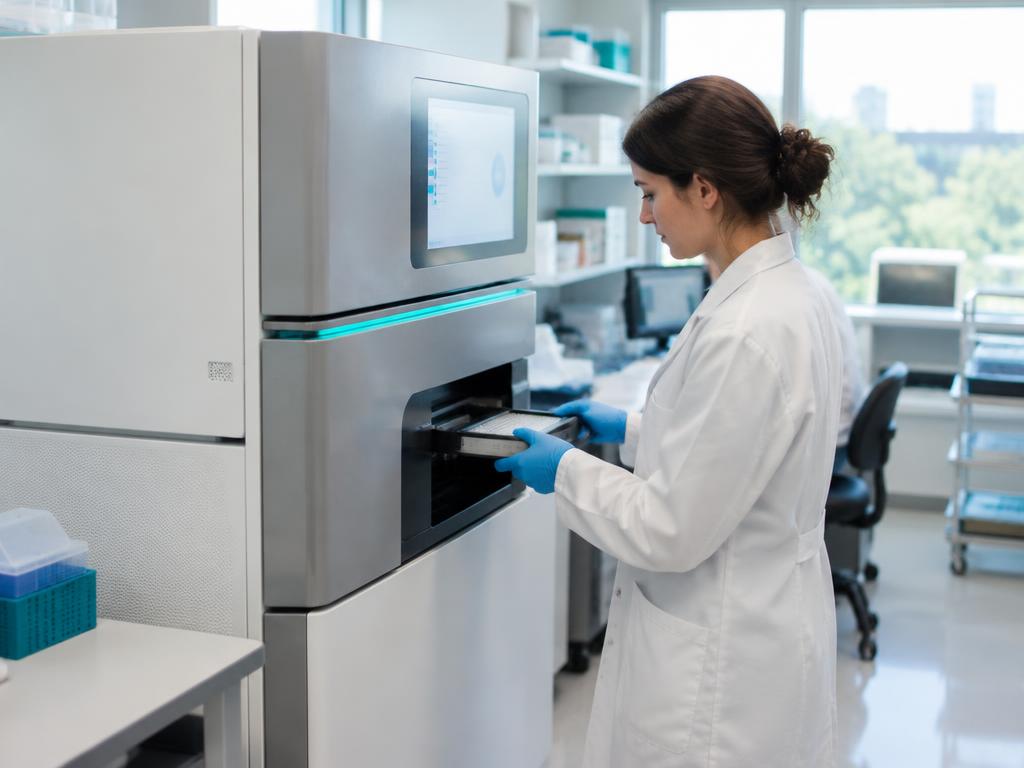
This is used to map the genetic material (DNA) of the tumour cells. This is done by Hartwig Medical Foundation with state-of-the-art equipment using whole genome sequencing (WGS). This technique determines the entire genetic material of the tumour, its DNA and the errors in it (‘the profile’), in one go. The DNA profile of the biopsy is used to learn more about how the tumour responds to treatment.
Once the biopsy has been taken, treatment can start. What it looks like depends on which drug has been selected based on the tumour profile. The effect is checked regularly during treatment. Participants can in principle continue the study drugs for as long as they benefit from them.
Taking part in DRUP
In this study we treat patients with targeted anti-cancer drugs based on the characteristics of their cancer cells. Several Dutch hospitals take part. When a patient wishes to take part, the treating doctor first checks (through physical and additional examinations) whether they meet all conditions for safe treatment with a specific drug. If so, treatment can start. What it looks like depends on which drug has been selected based on the tumour-cell characteristics. The effect is checked regularly during treatment. Patients can in principle continue the study drugs for as long as they appear to benefit from them.
DRUP in the Netherlands
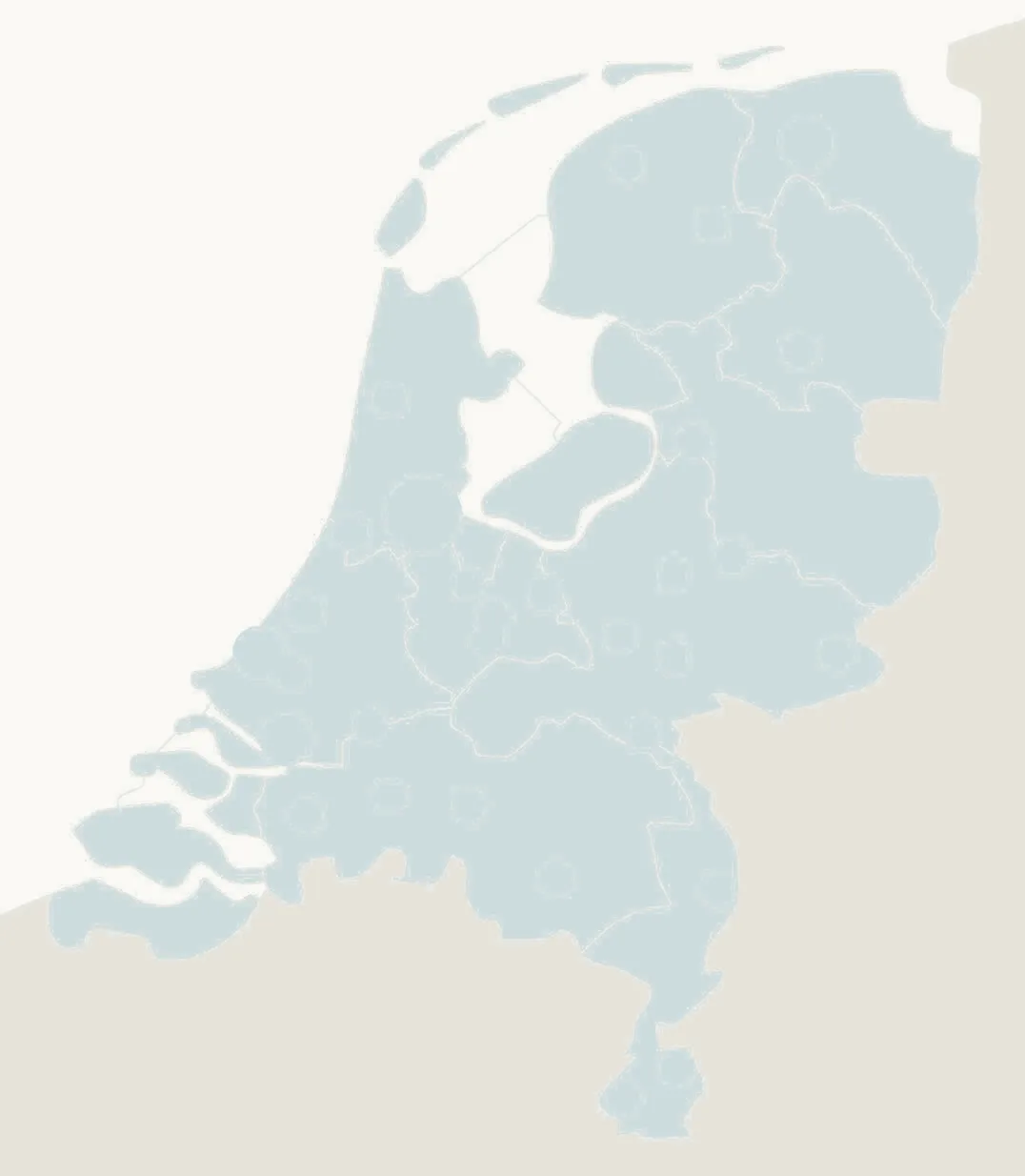
Participating hospitals
Click a location on the map to see the hospital and its local principal investigator (local PI). All centres are listed alphabetically below.
DRUP in Nature: podcast on the first 1,610 treated patients
In a recent Nature publication, researchers report on the first 1,610 patients treated within the DRUP study. An accompanying podcast discusses the findings and their implications for precision medicine. Read the article on Nature.com and listen to the podcast alongside. See also the news items from the NKI and LUMC. More DRUP publications are listed under Publications.
DRUP across Europe
A Dutch National Study on behalf of the Center for Personalized Cancer Treatment (CPCT) to Facilitate Patient Access to Commercially Available, Targeted Anti-cancer Drugs to determine the Potential Efficacy in Treatment of Advanced Cancers with a Known Molecular Profile
DRUP is a prospective, non-randomised clinical trial that aims to describe the efficacy and toxicity of commercially available, targeted anticancer drugs prescribed for patients with advanced cancer with a potentially actionable variant revealed by a genomic or protein expression test. The study also aims to simplify patient access to approved targeted therapies contributed to the programme by collaborating pharmaceutical companies, and to perform next generation sequencing on tumour biopsies for biomarker analyses.
Eligible patients have an advanced solid tumour, multiple myeloma or non-Hodgkin lymphoma for which standard treatment options are no longer available, and acceptable performance status and organ function. A genomic or protein expression test must have been performed on the tumour and must identify at least one potentially actionable molecular variant as defined in the protocol. The results are used to determine an appropriate drug from those available in the protocol, supported by a list of potential profiles, a molecular tumour board, a knowledge library and study coordinators who review and approve the match. Treatment starts once drug-specific eligibility criteria are confirmed and a fresh pre-treatment biopsy has been taken for future biomarker studies. All treated patients are followed for standard efficacy outcomes including tumour response, progression-free and overall survival and duration of treatment; treatment-related toxicity is also evaluated.
Objectives
Primary
- To describe the anti-tumour activity and toxicity of commercially available, targeted anti-cancer drugs used to treat patients with an advanced solid tumour, multiple myeloma or non-Hodgkin lymphoma that harbours a genomic or protein expression variant known to be a drug target or to predict sensitivity to a drug.
- To facilitate these patients’ access to commercially available, targeted anti-cancer drugs of potential efficacy.
Secondary
- To perform refined biomarker analyses, including (but not limited to) next generation sequencing, on a fresh tumour biopsy specimen.
European collaborations
In 2023, two European projects were launched: PCM4EU (Personalized Cancer Medicine for all EU citizens), funded by the EU4Health programme as part of Europe’s Beating Cancer Plan (grant 101079984), and PRIME-ROSE (Precision Cancer Medicine Repurposing System Using Pragmatic Clinical Trials), funded under Horizon Europe (grant 101104269).
These projects aim to broaden patient access to precision cancer medicine by building a network of trials whose protocols are based on the original Dutch DRUP, the so-called DRUP-like clinical trials. This European network of investigator-initiated trials with an aligned design and primary endpoints accelerates accrual and data sharing, improving patients’ access to off-label treatments. Besides DRUP, five European DRUP-like trials are currently ongoing and five more are about to start.
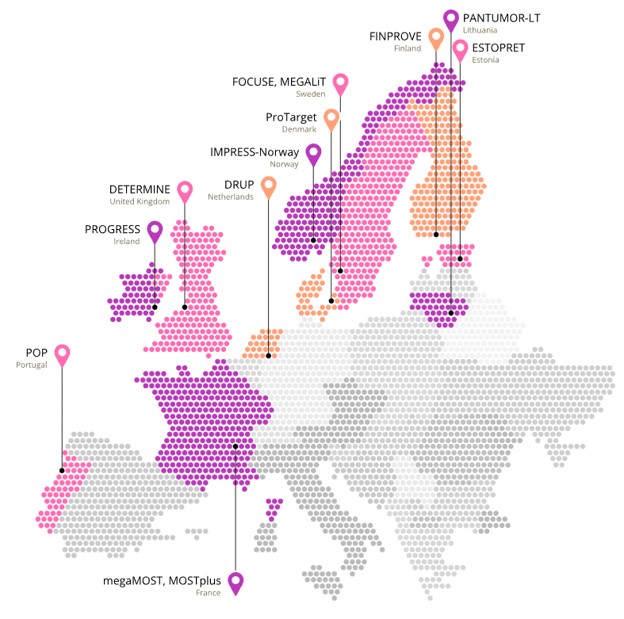
PCM4EU ran from January 2023 to June 2025 and focused on existing standards in molecular testing, from the availability of biomarker tests to the implementation of clinical decision support systems and the interpretation of results. With a data sharing platform, PCM4EU laid the basis for pooled cohort analyses between the DRUP-like trials within PRIME-ROSE, which started in July 2023 and runs for five years. PRIME-ROSE also strengthens methodologies in precision cancer trials, for example by developing synthetic control arms, models for standardising clinical data, and analyses of frameworks for evaluating and reimbursing on- and off-label oncology drugs in European countries. A detailed article on both projects is available on PubMed.
More on the European projects: PRIME-ROSE and PCM4EU. See also PRIME-ROSE on the Studies page.
Dutch-Nordic Alliance
In November 2021, DRUP and the Nordic Precision Medicine Trial Network (ProTarget in Denmark, MEGALiT in Sweden, IMPRESS-Norway and FINPROVE in Finland) signed a Memorandum of Understanding to harmonise study designs, define similar clinical endpoints and share data. Read the press release (pdf).
DRUP study team
Coordinating PIs
- Emile Voest, MD, PhDAntoni van Leeuwenhoek
- Henk Verheul, MD, PhDErasmus MC
- Hans Gelderblom, MD, PhDLeids Universitair Medisch Centrum
Coordinating sub-investigators
- Ilse Spiekman, MDRadboudumc
- Soemeya Haj Mohammad, MDLeids Universitair Medisch Centrum
- Floor Verbeek, MDAntoni van Leeuwenhoek
- Hans Timmer, MDLeids Universitair Medisch Centrum
- Maud van Maren, MDErasmus MC
Trial managers
- Femke VerwerAntoni van Leeuwenhoek
- Emilie van der Sande, PhDAntoni van Leeuwenhoek
Would you like more information?
See also the Drug Access Protocol (DAP).